Top Additive Manufacturers and Suppliers Worldwide: Which One Actually Fits Your Production Reality?
You're searching for top additive manufacturing suppliers, but you're probably asking the wrong question. The real challenge isn't finding big names—it's matching suppliers to your production stage, material requirements, and post-sales support structure. Most buyers waste months evaluating providers who were never suitable for their application scenario in the first place.
After 13 years helping manufacturers select CNC cutting equipment, I've watched dozens of clients evaluate additive suppliers alongside our systems. The buyers who succeed don't chase brand rankings—they match suppliers to three non-negotiable criteria: their current production maturity level, material compatibility requirements, and service infrastructure accessibility. This framework eliminates 70% of unsuitable vendors in the first week of evaluation.

Most "top supplier" lists won't tell you this because they're organized by company size or technology buzzwords, not by your actual decision-making needs. Let me show you how procurement teams at our client companies actually filter additive suppliers—and why three common mistakes derail most equipment investments.
Why Do Most Additive Supplier Comparisons Miss Your Real Selection Criteria?
You've probably seen ranked lists of additive manufacturers sorted by market share or annual revenue. These lists waste your evaluation time because they ignore the only factor that matters: application fit.
When our CNC equipment buyers also evaluate additive solutions, they succeed by asking one question first: "Does this supplier support my material class and production volume?" This single filter eliminates mismatched vendors faster than any feature comparison chart.

The Three-Axis Supplier Selection Framework We See Successful Buyers Use
Our clients who avoid wasted RFQ cycles organize suppliers along three axes before looking at equipment specs:
| Selection Axis |
Prototyping Stage |
Pilot Production |
Full Production Line |
| Primary Use Case |
Design validation, tooling trials |
Low-volume customized parts |
Series production with consistent specs |
| Typical Supplier Type |
Service bureaus, desktop equipment vendors |
Mid-scale machine providers with material libraries |
Industrial OEMs with process certification |
| Material Priority |
Speed and cost over consistency |
Balancing properties and repeatability |
Certified grades with batch traceability |
| Support Structure Needed |
Application engineering, quick iterations |
Process tuning, limited on-site training |
24/7 uptime support, spare parts inventory |
I've seen technical evaluators spend six months comparing layer resolution and build volumes, only to discover their chosen supplier doesn't support their material class or can't provide local technician visits. Your production stage determines which supplier category you should even be considering—skipping this step is the most expensive shortcut in equipment procurement.
Why Material Compatibility Eliminates More Suppliers Than Technology Type
Here's what most additive supplier guides won't tell you: material support matters more than whether the machine uses powder bed fusion or material extrusion. This truth becomes obvious when you work with flexible materials, composites, or any substrate beyond standard ABS and nylon.
In our composite and flexible materials cutting work, we've watched customers evaluate additive options for gaskets, automotive interior trim, and packaging prototypes. The pattern is consistent—suppliers who dominate metal and rigid polymer markets often have zero expertise in elastomers, TPUs, or fiber-reinforced flexible composites. Their equipment physically can't handle these material classes, but that limitation doesn't appear in their capability brochures.
The Hidden Cost Structure Most Buyers Discover Too Late
Equipment purchase price is the smallest part of your total ownership cost, but it's the number most RFQ processes focus on first. This priority inversion creates expensive surprises in year two of operation.
Our customers who adopted additive systems report these post-purchase cost revelations:
- Material lock-in penalties: Proprietary material systems that force you to buy consumables at 3-5× open market prices, adding $15,000-$40,000 annually for moderate production volumes
- Certification recurrence: Each new material batch requires testing and validation, consuming engineering time that wasn't budgeted in the ROI model
- Remote-only support limitations: Suppliers with no local service presence bill travel time and expenses for every technician visit, turning a 4-hour repair into a $3,000 service call
I'm not saying expensive suppliers are bad choices—I'm saying their total cost structure needs to appear in your decision matrix before you eliminate lower-priced options that might offer better lifecycle economics for your situation.
Which Additive Suppliers Actually Support Flexible Materials and Composites?
If you're working with anything softer than rigid thermoplastics, your supplier shortlist just got much shorter. Most top-ranked additive manufacturers focus on metals and engineering polymers because those markets have larger volumes and higher margins.
In conversations with customers processing automotive seals, furniture padding, and packaging materials, we've identified a consistent gap: additive suppliers who can prototype flexible parts but can't maintain material properties at production volumes. This isn't a technology limitation—it's a business model mismatch.
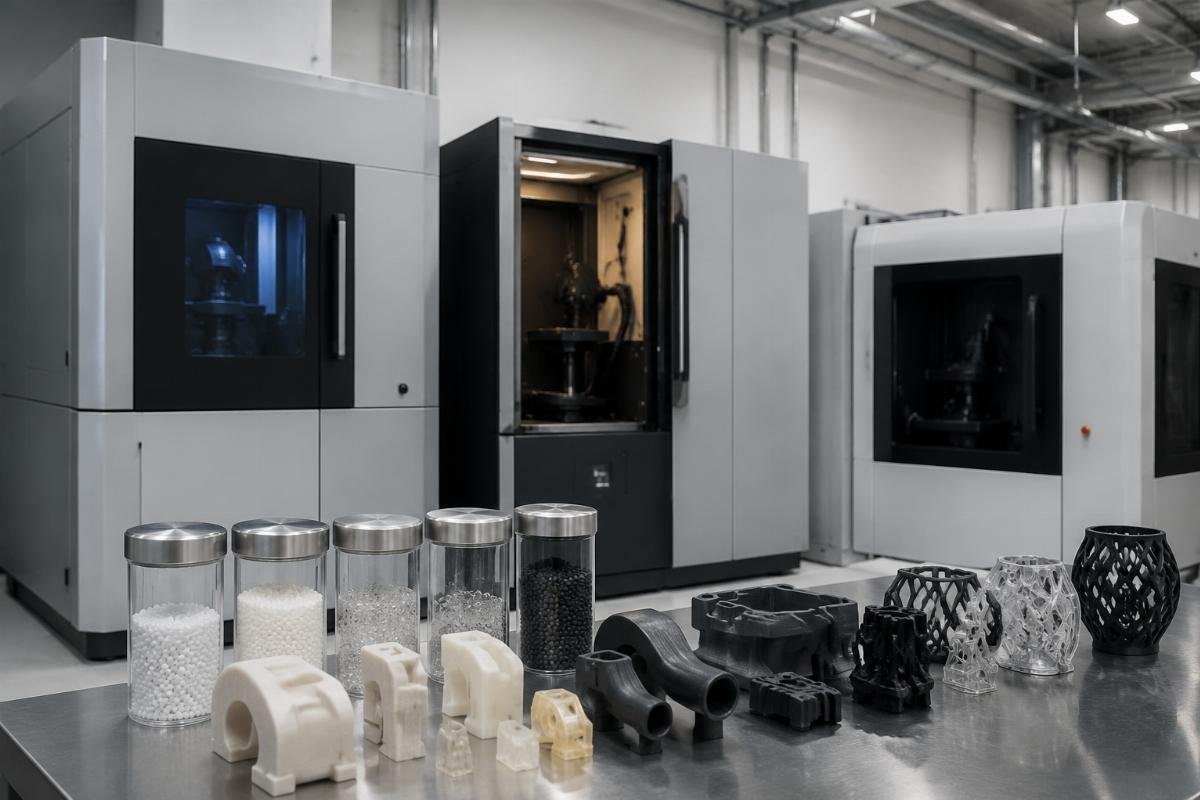
Prototyping Versus Production: Why the Same Supplier Rarely Handles Both
Your supplier search probably started with prototyping needs, but you're thinking ahead to production scaling. This is smart planning, but it creates a vendor selection trap.
Suppliers who excel at rapid prototyping optimize for speed and material variety. They keep dozens of materials in stock, offer quick turnaround times, and provide hands-on application engineering. Their business model depends on high-mix, low-volume work.
Production suppliers optimize for repeatability and uptime. They certify specific material grades, implement strict process controls, and build redundant equipment capacity. Their business model depends on long runs with minimal setup changes.
I've watched procurement teams try to force a single vendor to serve both needs. It rarely works. The prototyping specialist can't guarantee the process consistency needed for production. The production supplier won't support the material experimentation required for design validation. You're better off accepting that you need different vendors for different stages.
Geographic Service Infrastructure: The Factor That Determines Uptime
Here's a scenario we've seen multiple times: a buyer selects a supplier with impressive technology, attractive equipment pricing, and good initial responsiveness. Six months after installation, a print head fails. The nearest service technician is in a different country. Parts take three weeks to clear customs. Your production line sits idle while you wait.
Geographic support infrastructure isn't exciting to evaluate, but it directly determines your operational risk. When you're assessing suppliers, ask these questions before you review technical specifications:
- Where is the nearest authorized service center to your facility?
- Do they stock spare parts locally or ship from a central warehouse?
- What's their guaranteed response time for equipment down scenarios?
- Can they provide temporary equipment if repairs exceed 48 hours?
Suppliers with strong regional presence cost more upfront because they've invested in local infrastructure. That premium is insurance against extended downtime. Buyers who choose low-cost suppliers without local support often spend the savings difference on overnight shipping charges and lost production in the first year.
Material Certification and Regulatory Compliance: Hidden Barriers in Regulated Industries
If you're manufacturing automotive components, medical devices, or food-contact packaging, your material certifications might eliminate more suppliers than technical capabilities.
Additive manufacturing materials need the same regulatory compliance as traditionally processed materials—UL ratings for flammability, FDA approvals for food contact, automotive OEM specifications for interior components. Many additive suppliers offer materials that meet mechanical property targets but lack the certification documentation required for regulated applications.
We work with automotive interior part manufacturers who must provide material traceability and compliance certificates for every component. When they evaluated additive suppliers, only three out of fifteen could provide certified materials with proper documentation. The other twelve had equivalent mechanical properties but couldn't meet the compliance requirements. Technical capability was irrelevant—regulatory gaps made them non-viable.
How Do Leading Additive Suppliers Compare for Specific Application Scenarios?
Now that you understand the selection framework, let's look at how specific supplier types align with common manufacturing scenarios. I'm not ranking suppliers by revenue or technology—I'm matching them to decision contexts our customers actually face.
The most useful supplier comparison isn't "which is best overall"—it's "which suppliers have demonstrated success in scenarios similar to mine." Your goal is to shortlist vendors who've already solved problems that look like yours, not to identify the industry's largest players.

Industrial Production Equipment Suppliers: When You Need Certified Processes
If you're replacing existing production processes or adding capacity to established product lines, you need suppliers who prioritize process repeatability over material variety.
These suppliers typically offer:
- Equipment qualification protocols that document process parameters
- Material certifications with batch-to-batch traceability
- Preventive maintenance programs with guaranteed uptime targets
- Multi-year warranty and service contracts
The tradeoff is reduced flexibility. You won't get rapid material changes or experimental process parameters. These suppliers design their systems for locked-down processes with minimal variation. If you're manufacturing parts that require consistency across thousands of units, this constraint is actually valuable—it prevents operators from introducing variation that creates quality problems.
Material Specialists: When Your Substrate Isn't Standard
Some suppliers focus on specific material classes rather than broad market coverage. If you're working with elastomers, photopolymers, ceramics, or composites, material specialists often provide better results than general-purpose equipment manufacturers.
Material-focused suppliers have developed their process parameters specifically for their target substrate class. They understand the thermal behavior, layer adhesion mechanisms, and post-processing requirements that generic equipment suppliers gloss over. The limitation is that you're often locked into their material ecosystem—you can't easily source compatible materials from alternative suppliers.
In our experience with flexible materials processing, material specialists consistently outperform general equipment on challenging substrates. If your application depends on specific material properties that standard offerings can't meet, pay the premium for specialized suppliers.
Service Bureaus: When You Need Production Volume Without Equipment Investment
Not every manufacturer should buy additive equipment. If your volumes are low, your part designs are still evolving, or you lack in-house additive expertise, service bureaus provide a lower-risk entry point.
Service bureaus make sense when:
- Your annual production volume is under 1,000 parts
- You're still validating design iterations and need material flexibility
- Your facility lacks the environmental controls needed for additive equipment
- You want to test additive feasibility before committing to equipment purchase
The misconception is that service bureaus are only for prototyping. Several of our customers use service bureaus for ongoing production of low-volume customized parts. They've calculated that outsourcing is more economical than maintaining in-house equipment, staff training, and material inventory for parts they produce quarterly rather than daily.
Regional Equipment Distributors: When Local Support Determines Success
In some markets, your best supplier option isn't a direct purchase from a major manufacturer—it's working through a regional distributor with strong local support infrastructure.
Distributors add a cost layer, but they provide value that manufacturer direct sales can't match:
- Local stock of spare parts and consumables
- Technicians who can reach your facility same-day or next-day
- Application engineering in your language and time zone
- Training programs tailored to your regional workforce skill levels
We work with manufacturers across multiple countries, and I consistently see better outcomes from buyers who chose well-supported regional distributors over direct purchases from prestigious manufacturers with weak local presence. Equipment uptime depends more on service response times than on initial equipment specifications.
When Does Additive Manufacturing Actually Make Sense Versus Alternative Processes?
I need to be direct about this: additive manufacturing is not the right solution for many applications, and suppliers who claim otherwise are selling equipment rather than solving problems.
As a CNC cutting equipment manufacturer, I have no incentive to promote additive technology over our own products. But I've watched enough customers evaluate both approaches to know this: the right process depends on your part geometry, volume, material requirements, and tolerance specifications. Buyers who assume additive is automatically "better" because it's newer technology consistently make expensive mistakes.
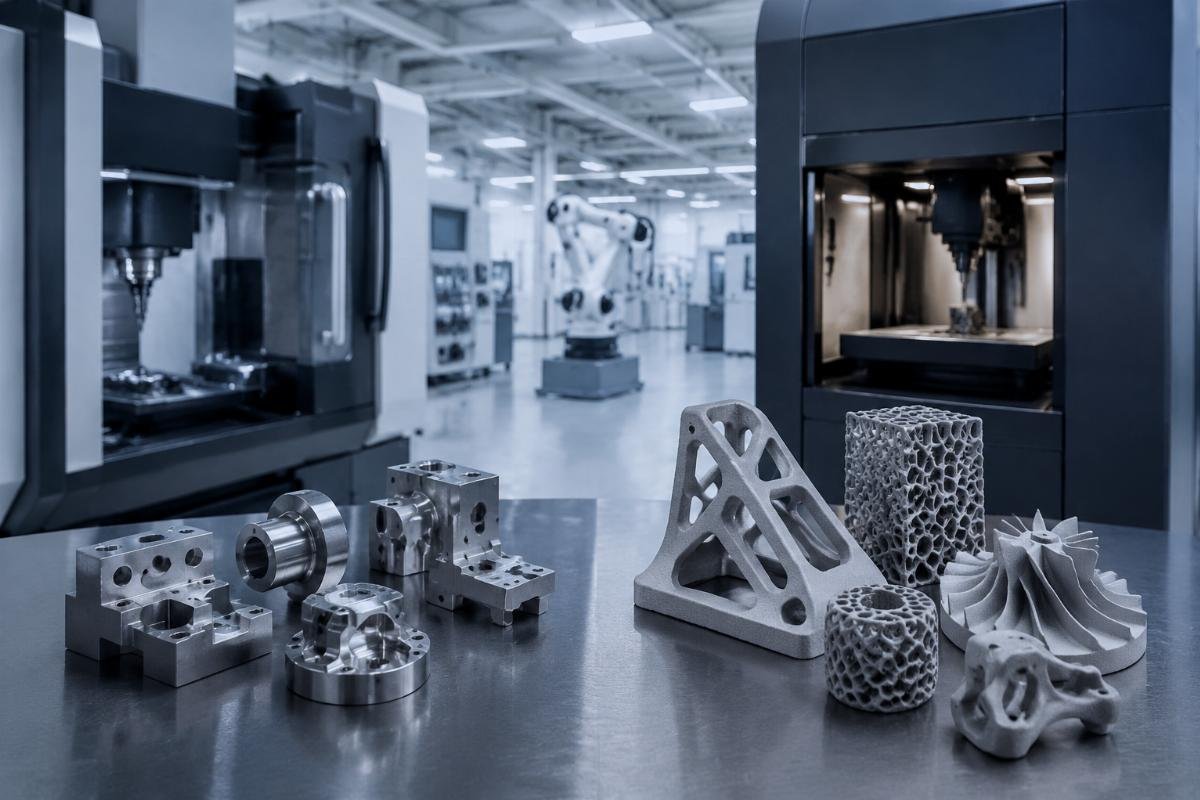
Part Geometry and Volume: The Primary Process Selectors
Additive makes sense for complex geometries that are difficult or impossible to produce with subtractive methods—internal channels, organic shapes, consolidated assemblies that eliminate fasteners. If your part is essentially a flat pattern, profile cut, or simple extrusion, additive's geometric freedom provides no value.
Volume matters because additive processes are inherently slower than molding, stamping, or cutting for simple geometries. The break-even point varies by part, but as a general rule:
- Under 100 parts: additive often wins on tooling avoidance
- 100-1,000 parts: process economics are situational, need detailed analysis
- Over 1,000 identical parts: traditional manufacturing almost always costs less per part
Our CNC cutting systems produce flat flexible material parts at speeds additive equipment can't match. We can cut intricate patterns in gasket materials, composites, or fabrics in seconds per part. For these geometries, additive offers no speed advantage and usually compromises material properties due to layer-by-layer construction.
Material Properties: Where Layer-Based Construction Creates Limitations
Additive parts have directional properties—they're stronger in the build plane than perpendicular to it. This anisotropy matters for structural applications, sealing applications, and any part where loading direction varies.
If you're manufacturing gaskets, seals, or flexible components, the layer boundaries in additive parts can create leak paths or stress concentration points that don't exist in parts cut from continuous sheet materials. This isn't a technology limitation that future development will solve—it's inherent to how additive processes construct parts.
We've had customers test additive-produced gaskets alongside CNC-cut versions from the same material specification. The additive parts failed sealing tests because layer boundaries provided pathways for fluid migration. The cut parts, produced from continuous sheet stock, maintained seal integrity. For this application class, additive was technically feasible but functionally inadequate.
Surface Finish and Post-Processing: The Hidden Timeline Extension
Additive parts directly from the machine rarely meet final surface finish requirements. Most applications need sanding, smoothing, painting, or other post-processing steps. These operations add labor time and cost that need to appear in your process comparison.
If your parts need smooth surfaces or specific aesthetic finishes, factor in:
- Labor hours for manual finishing operations
- Dimensional changes during post-processing that affect tolerance achievement
- Secondary equipment costs for automated finishing systems
- Scrap rates during learning curve for finishing techniques
Traditional manufacturing processes often produce finished surfaces directly. A molded part exits the tool ready for assembly. A CNC-cut part from our equipment has clean edges that need no additional processing. When you account for total process time from raw material to finished part, additive's advantage in complex geometries can disappear if post-processing requirements are significant.
Hybrid Workflows: Combining Additive and Traditional Processes
The most sophisticated manufacturers don't choose additive versus traditional processes—they combine both in hybrid workflows that leverage each method's strengths.
Common hybrid approaches include:
- Additive for complex cores or internal features, with traditional machining for precision surfaces
- Additive for tooling (jigs, fixtures, molds) that support traditional production processes
- Additive for customized components within larger assemblies produced traditionally
- Additive for prototypes that validate designs before committing to production tooling
If you're assuming your supplier evaluation needs to end with a single process selection, you're limiting your options. The buyers who get the best results ask: "Which parts of my product benefit from additive, and which are better suited to traditional processes?"
What Should Your Additive Supplier Evaluation Process Actually Look Like?
You now understand why most supplier comparisons don't match real decision-making needs. Let me walk you through the evaluation process our successful customers actually use—stripped of the procurement theater that adds time without adding insight.
The goal isn't to objectively rank all possible suppliers—it's to rapidly eliminate mismatches and identify the two or three vendors who align with your specific requirements. Most RFQ processes do this backwards, spending 80% of time comparing already-qualified vendors and only 20% on the elimination step that actually drives decisions.
Week One: Define Your Non-Negotiable Requirements
Before you contact any suppliers, document these five parameters:
-
Material requirements: List your exact substrate needs, not categories. "Flexible TPU with Shore A hardness 60-70" instead of "flexible materials."
-
Production volume range: Define minimum, typical, and maximum quantities. Include timeline—1,000 parts per year is different from 1,000 parts per month.
-
Critical dimensions and tolerances: Identify the features that matter. Don't specify tighter tolerances than your application actually requires.
-
Geographic constraints: Where is your production facility? What's your maximum acceptable service response time?
-
Budget range: Include equipment, installation, training, first-year materials, and service contracts. Be honest—suppliers can tell when your budget doesn't match your requirements.
These parameters will eliminate 60-70% of potential suppliers immediately. The material specialist who only handles rigid polymers can't meet your flexible material needs. The prototyping service bureau can't support your production volumes. The supplier with no local service presence can't meet your uptime requirements.
Week Two: Three-Supplier Shortlist,
